


Detail photo of a stack of books on a desk
Collection

Using Powerful Content to Cultivate Educators for Today’s K-12 Students

This collection’s resources demonstrate how and why the selection and use of powerful course content is an important and impactful way to improve learning for both future educators and students.

Updated August 2026
Chavella T. Pittman headshot
Professor of Sociology, Dominican University
View Bio
Wintre Johnson headshot
Assistant Professor
Curriculum Instruction & Special Education
View Bio

Mirrors, Windows, and Sliding Glass Doors

Perspectives: Choosing and Using Books for the Classroom

This is a key resource where Sims Bishop–a foremother of the sub-field of diverse children’s and young adult literature, particularly studies of African American children’s literature–deftly uses an analogy to describe the importance of varied and diverse perspectives in children’s literature.


Headshot of Chavella T. PittmanHeadshot of Wintre Johnson
Chavella T. Pittman, Wintre Johnson

This resource is useful because Bishop’s "windows, mirrors, and sliding glass door" framing is both 1) broadly applicable and 2) challenges educators to consider the functions and possibilities of engaging with children’s and young adult literature that honors often-marginalized lived experiences.

View excerpt

When children cannot find themselves reflected in the books they read, or when the images they see are distorted, negative, or laughable, they learn a powerful lesson about how they are devalued in the society of which they are a part. Our classrooms need to be places where all the children from all the cultures that make up the salad bowl of American society can find their mirrors.

Children from dominant social groups have always found their mirrors in books, but they, too, have suffered from the lack of availability of books about others. They need the books as windows onto reality, not just on imaginary worlds. They need books that will help them understand the multicultural nature of the wor1d they live in, and their place as a member of just one group, as well as their connections to all other humans. In this country, where racism is still one of the major unresolved social problems, books may be one of the few places where children who are socially isolated and insulated from the larger world may meet people unlike themselves. If they see only reflections of themselves, they will grow up with an exaggerated sense of their own importance and value in the world - a dangerous ethnocentrism.
Was this resource helpful?

Toward a Critical Race Theory of Education

Teachers College Record: The Voice of Scholarship in Education

This is a foundational article in which Ladson-Billings and Tate connect the critical race theory (CRT) developed in legal scholarship to the field of education. For scholars who use CRT in their work, this article is one to know well and cite often.

Headshot of Chavella T. PittmanHeadshot of Wintre Johnson
Chavella T. Pittman, Wintre Johnson

This resource is useful as it ushers in intellectual inquiries that center race and racism as significant features within the U.S. education system.

View excerpt

This article asserts that despite the salience of race in U.S. society, as a topic of scholarly inquiry, it remains untheorized. The article argues for a critical race theoretical perspective in education analogous to that of critical race theory in legal scholarship by developing three propositions: (1) race continues to be significant in the United States; (2) U.S. society is based on property rights rather than human rights; and (3) the intersection of race and property creates an analytical tool for understanding inequity. The article concludes with a look at the limitations of the current multicultural paradigm.

Was this resource helpful?

Of Victorianism, Civilizationism, and Progressivism: The Educational Ideas of Anna Julia Cooper and W.E.B. Du Bois, 1892–1940

History of Education Quarterly

This resource places two great Black educators of the late 19th and early 20th centuries in conversation: Anna Julia Cooper and W.E.B. DuBois.

Headshot of Chavella T. PittmanHeadshot of Wintre Johnson
Chavella T. Pittman, Wintre Johnson

This resource is useful because the author pushes future and current educators to question the purpose(s) of education and urges them to consider the distinctions between education and schooling.

View excerpt

Anna Julia Cooper and W.E.B. Du Bois were two of the most prominent African-American educators of the late nineteenth and early twentieth centuries. During this period, they both envisioned a broad education tailored specifically to the critical intellectual and vocational needs of the entire black community. They also participated in international affairs, attended and worked together at some of the same conferences and meetings, and shared a belief that education should encourage blacks to place their situation and struggles within a global context. In developing their educational ideas, they both addressed a wide range of educational issues (black women's education, education of the black masses, and the history curriculum in black schools) that spoke to the universal as well as the local realities of black life in America. At the core of their educational thought was their belief that social advancement would result in equality for blacks.

Was this resource helpful?

Ending Curriculum Violence

Learning for Justice

This resource inserts a necessary critique about the content and enactment of curriculum. It posits that choices in and teaching of a curriculum can be a form of racial aggression for many non-white and other historically marginalized students, leveraging Ighodaro and Wiggan's notion of "curriculum violence."

Headshot of Chavella T. PittmanHeadshot of Wintre Johnson
Chavella T. Pittman, Wintre Johnson

This resource is useful as it makes clear how and why curriculum choices and enactment are not neutral.

View excerpt

Two Black scholars, Erhabor Ighodaro and Greg Wiggan, coined the term curriculum violence in their 2010 work Curriculum Violence: America’s New Civil Rights Issue. They defined it as a “deliberate manipulation of academic programming” which “compromises the intellectual or psychological well-being of learners.”

Curriculum violence is indeed detrimental, but it does not have to be deliberate or purposeful. The notion that a curriculum writer’s or teacher’s intention matters misses the point: Intentionality is not a prerequisite for harmful teaching. Intentionality is also not a prerequisite for racism. As I define it in my work, curriculum violence occurs when educators and curriculum writers have constructed a set of lessons that damage or otherwise adversely affect students intellectually and emotionally.

Was this resource helpful?

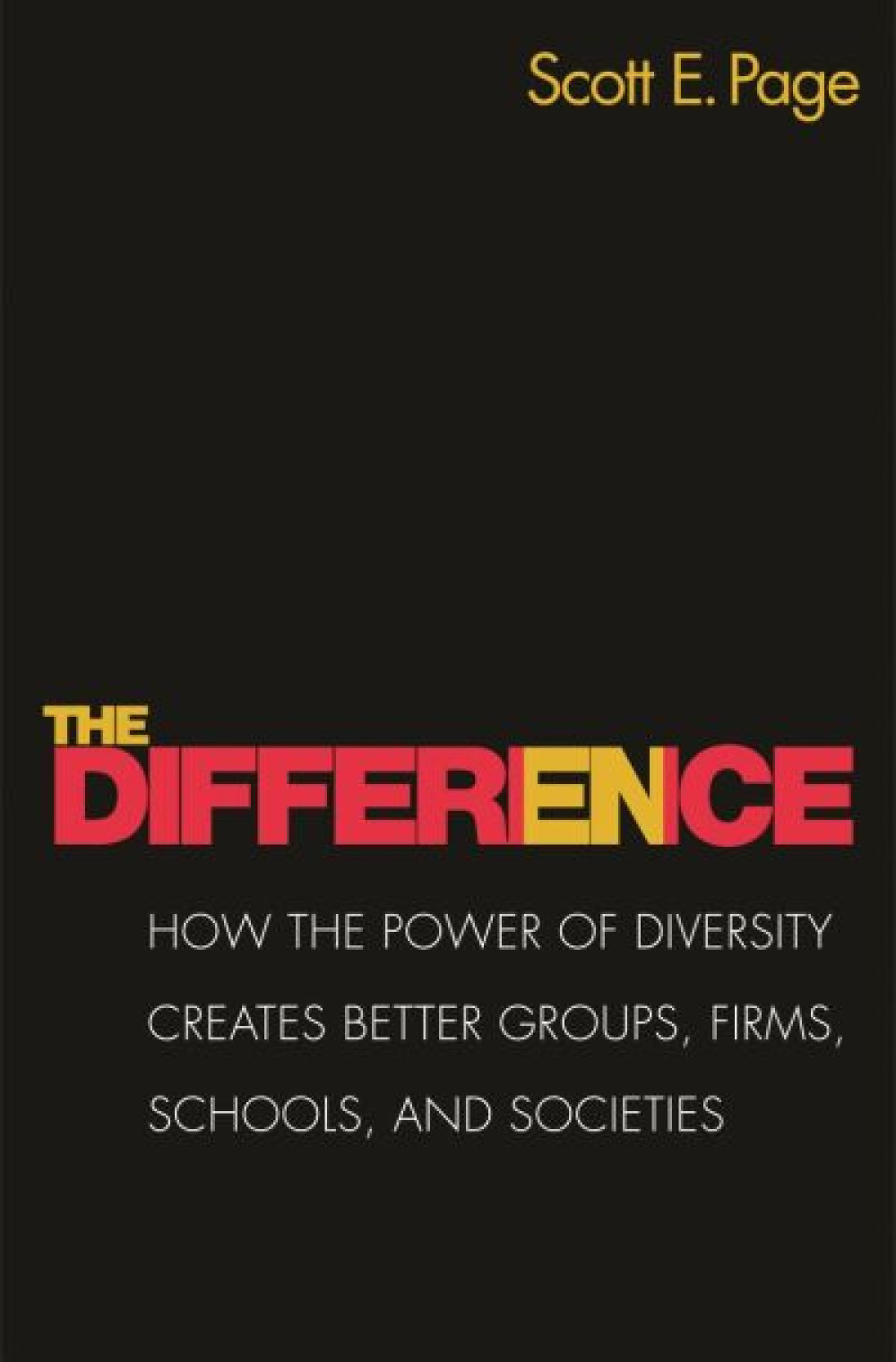
The Difference: How the Power of Diversity Creates Better Groups, Firms, Schools, and Societies

Scott E. Page

This is a foundational resource that argues and provides evidence that cognitively diverse groups consistently outperform groups of like-minded experts.

Headshot of Chavella T. PittmanHeadshot of Wintre Johnson
Chavella T. Pittman, Wintre Johnson

This book provides easy descriptions of and science evidence for how/why diverse perspectives result in superior outcomes than homogeneous ones.

View excerpt

In this landmark book, Scott Page redefines the way we understand ourselves in relation to one another. The Difference is about how we think in groups--and how our collective wisdom exceeds the sum of its parts. Why can teams of people find better solutions than brilliant individuals working alone? And why are the best group decisions and predictions those that draw upon the very qualities that make each of us unique? The answers lie in diversity--not what we look like outside, but what we look like within, our distinct tools and abilities.

Was this resource helpful?

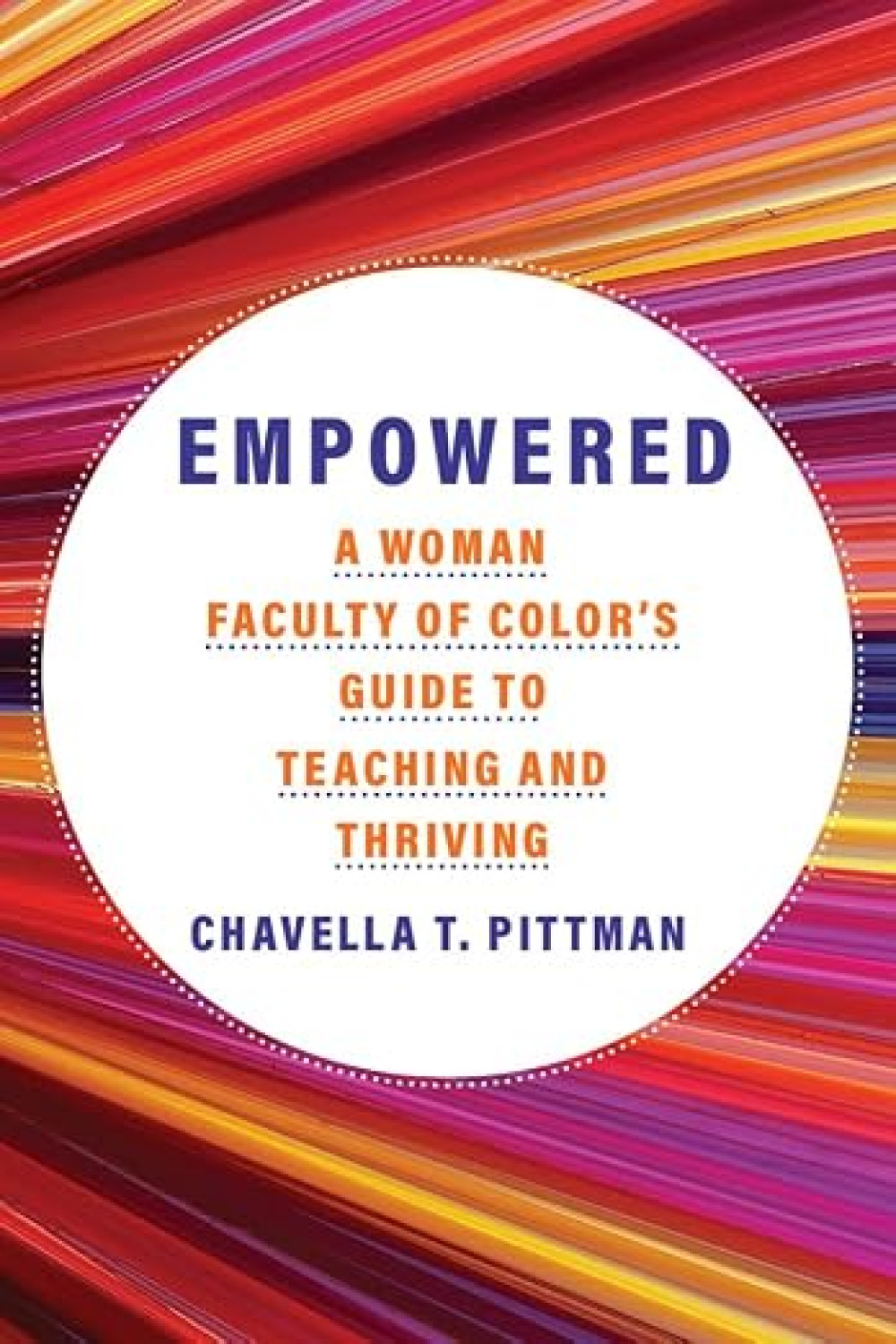
Empowered: A Woman Faculty of Color's Guide to Teaching and Thriving

Chavella T. Pittman

This book covers how to be unapologetically authentic in the classroom, speak up in reviews about classroom excellence, and recover a sense of joy in teaching.

Headshot of Chavella T. PittmanHeadshot of Wintre Johnson
Chavella T. Pittman, Wintre Johnson

This resource shares the benefits of including multiple perspectives in course materials and discusses possible ways to address those who don’t understand this teaching excellence practice.

View excerpt

Experience tells us, and studies confirm, that women faculty of color are among the most overworked, unfairly criticized, and least rewarded individuals serving higher education today. They are also the most thwarted when it comes to the basic goals of an academic career: tenure, security, and personal satisfaction. This, despite ranking as some of the most talented teachers we have: Women faculty of color disproportionately overdeliver on higher education's loftiest promise—preparing students to contribute to the world. In this book, these highly effective, overworked, underappreciated women will find expert guidance, encouragement, and practical steps to meet the outsized challenges women of color face in academia, and finally get what they've long since earned.

Was this resource helpful?

Want to recommend a resource to add to this collection? Send us an email.